
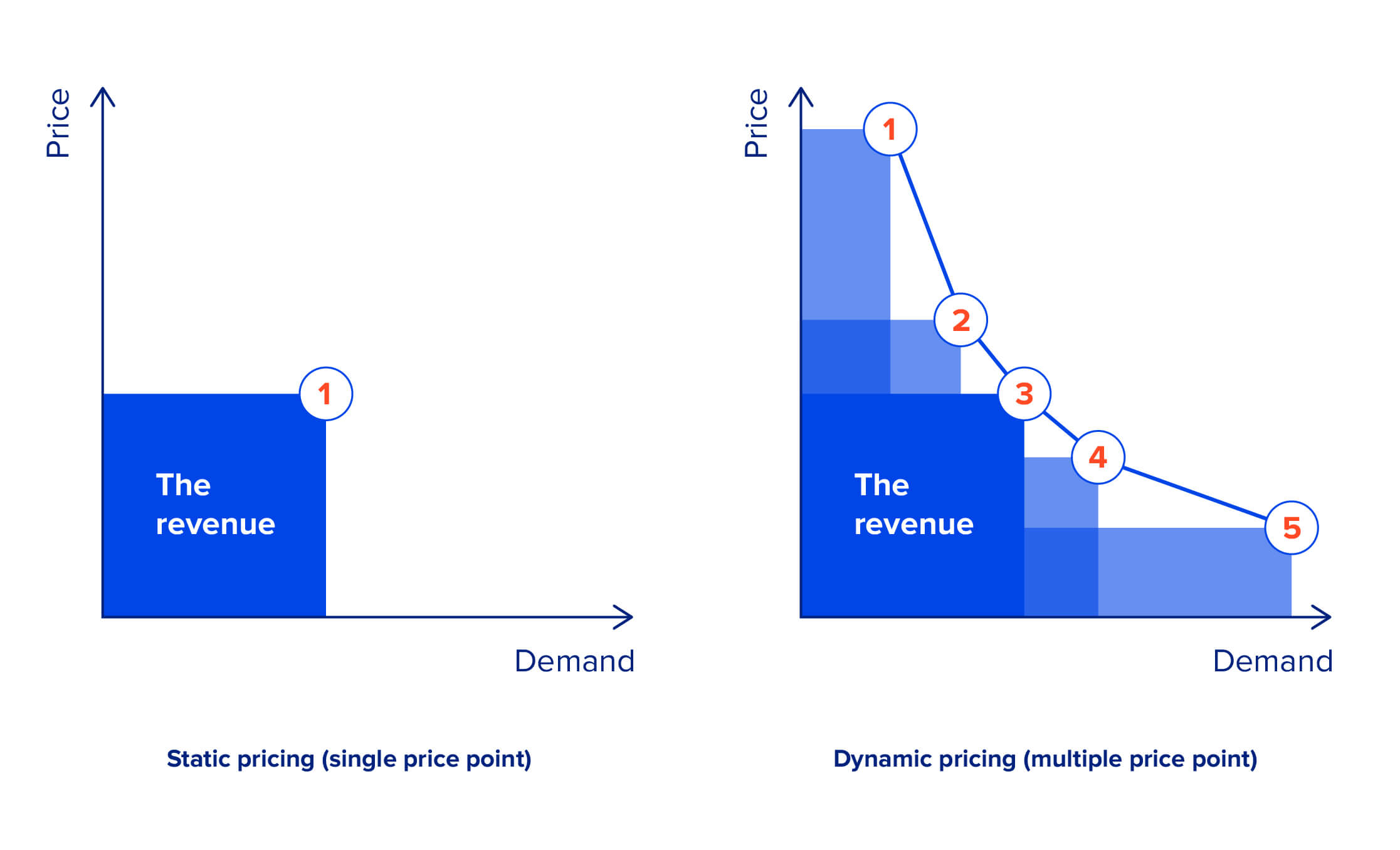
Price is the monetary amount exchanged for a product or service. In e-commerce, the giá bán is what the seller asks, the transaction price is what the buyer actually pays, and both only make sense when you know what competitors charge for the same item.
What does price mean in e-commerce?
In some contexts, giá represents the sum requested by a seller in exchange for their goods or services, commonly referred to as the giá bán. In contrast, the transaction price indicates the actual amount that a buyer pays.
What is the difference between a price and a price point?
It is important to distinguish between giá và mức giá. A price point is a specific position on a theoretical demand curve, and each point yields a different level of demand.
- Generally, demand decreases as the price rises (moving up the demand curve). The responsiveness of demand to price changes is known as độ co giãn của cầu theo giá.
To understand how price, demand and perceived value interact, you can explore định giá dựa trên giá trị concepts.
Why should e-commerce businesses monitor competitors’ prices?
E-commerce businesses often share a significant portion of their product offerings with their competitors, meaning they may sell identical items.
Consumers base their purchasing decisions on multiple factors, including perceived value, shipping speed, convenience and overall shopping experience. Getting a good deal is consistently one of the main reasons shoppers choose one retailer over another.
Given the transparency of online pricing, e-commerce sellers are encouraged to present compelling offers. Without insights into your competitors’ pricing for the same products, it becomes challenging to gauge your competitiveness in the market.
How can you track competitor prices?
Manual tracking for small catalogs
If your catalog is small, you might opt for manual tracking. This involves visiting your competitors’ websites, gathering data and entering it into a spreadsheet. The work grows quickly with every product and every competitor you add, and it has to be repeated each time prices change.
Building your own tool or using software
For businesses with a larger assortment of goods, you have two primary options: develop your own tracking engine or use specialized software.
It is essential to set realistic expectations based on your available resources. Software solutions are typically cost-effective and user-friendly, while developing an in-house system can be pricey and complex to maintain. However, building your own allows for full customization to meet your specific needs.
Why is price intelligence necessary?
Regardless of the approach you choose, accumulating pricing intelligence is crucial.
This information can improve your business’s profitability over time. With the right price intelligence software, such as automated competitor price tracking, you can automate the tracking process and make more informed pricing decisions every day.
Điểm chính cần nhớ
- Price is the monetary amount exchanged for a product or service; the selling price is what the seller asks and the transaction price is what the buyer pays.
- A price point is a position on a demand curve; demand generally falls as price rises, which is measured by price elasticity of demand.
- Online prices are transparent, so you need to know what competitors charge for the same products to judge your own competitiveness.
- Manual tracking only works for small catalogs; larger stores choose between building an in-house tool and using price tracking software.
Câu hỏi thường gặp
What is the difference between selling price and transaction price?
The selling price is the amount a seller asks for a product or service. The transaction price is the amount the buyer actually pays.
What is a price point?
A price point is a specific position on a theoretical demand curve. Different price points yield different levels of demand, and demand generally decreases as the price rises.
Why track competitor prices in e-commerce?
Many online stores sell identical products and prices are easy to compare online. Without knowing competitors’ prices for the same items, it is hard to judge how competitive your own offer is.
Should I track competitor prices manually or with software?
Manual tracking in a spreadsheet can work for a small catalog. For larger assortments, software is usually more cost-effective and easier to run than building and maintaining an in-house tracking system.
 English
 ไทย
 Tiếng Việt
 한국어
 日本語
 简体中文
 Français
 Deutsch
 Русский
 Italiano
 Polski
 Español
Để lại một bình luận