









Price is defined as the monetary amount exchanged for a product or service.
In some contexts, it represents the sum requested by a seller in exchange for their goods or services—commonly referred to as the selling price. In contrast, the transaction price indicates the actual amount that a buyer pays.
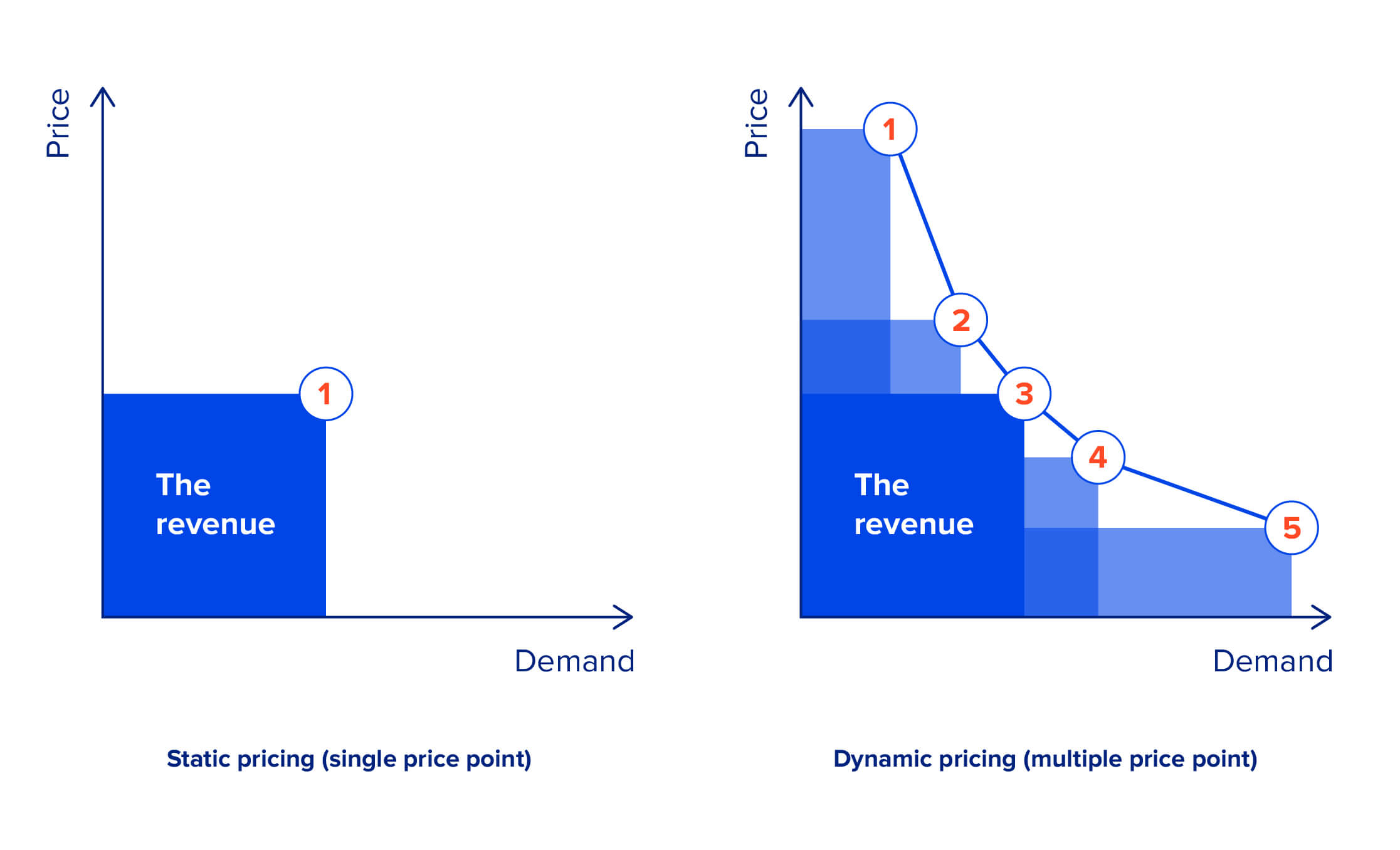
It's important to distinguish between price und price point. The latter refers to specific positions on a theoretical demand curve.
Price Points
- Points A, B, C, and D on the demand curve yield varying levels of demand. Generally, demand decreasesas the price rises (moving from point D to point A). The responsiveness of demand to price changes isknown as price elasticity of demand.
To understand how price, demand, and perceived value interact, you can explore value-based pricing concepts.
The Importance of Monitoring Competitors' Prices in E-commerce
E-commerce businesses often share a significant portion of their product offerings with their competitors, meaning they may sell identical items.
Consumers base their purchasing decisions on multiple factors, including perceived value, shipping speed, convenience, and overall shopping experience. According to a study by Google, 87% of shoppers indicate that securing a good deal is a crucial element when selecting a brand or retailer.
Given the transparency of online pricing, e-commerce sellers are encouraged to present compelling offers. Without insights into your competitors' pricing for the same products, it becomes challenging to gauge your competitiveness in the market.
Common Strategies for Tracking Competitor Prices
If your inventory is limited to about 50 products, you might opt for manual tracking. This involves visiting your competitors’ websites, gathering data, and entering it into a Google Docs spreadsheet—an endeavor that could take slightly over six hours, especially if you have around ten competitors to consider.
For businesses with a larger assortment of goods, you have two primary options: develop your own tracking engine or utilize specialized software.
It's essential to set realistic expectations based on your available resources.
Software solutions are typically cost-effective and user-friendly, while developing an in-house system can be pricey and complex to maintain. However, building your own allows for full customization to meet your specific needs.
The Necessity of Price Intelligence
Regardless of the approach you choose, accumulating pricing intelligence is crucial.
This information can significantly enhance your business's profitability over a few months. By employing the right price intelligence software, you can automate the tracking process, enabling more informed pricing decisions daily.
Grasping the Concept of Price in E-commerce
Price signifies the monetary amount exchanged for products or services.
In certain instances, it illustrates the price a seller requests in return for what they offer, commonly referred to as selling price. Alternatively, the transaction price denotes the specific amount actually paid by the buyer.
It's also essential to understand the distinction between price und price point, where the latter indicates specific locations along a theoretical demand curve.
Understanding Price Points
- Points A, B, C, and D represent different demand levels on this curve. Typically, demand diminishes asprice escalates (moving from D to A). The concept of price elasticity of demand describes how demandchanges with price variations.
For a deeper understanding of price dynamics, refer to value-based pricing.
Why E-commerce Businesses Should Track Competitors' Pricing
In the e-commerce sector, many online stores sell similar products. Consumers make purchase decisions based on various factors like deals, delivery times, convenience, and shopping experiences. A Google study revealed that 87% of consumers consider getting a good deal a priority when selecting a brand or store.
In a landscape where online price visibility is prevalent, sellers are pushed to provide appealing offers. Lack of insights into competitors' prices means you'll struggle to stay competitive.
Popular Methods for Tracking Competitor Prices
For businesses with up to 50 products, manual tracking is an option. This means visiting competitors’ websites to collect data and recording it in a Google Docs spreadsheet, which might take a bit over six hours, assuming you monitor around ten rivals.
For those with larger inventories, you have two choices: establishing your own tracking system or utilizing external software.
Manage your expectations wisely, considering your resources.
While software solutions can be cost-effective and simple to implement, building an in-house system may require more investment and technical upkeep but offers complete customization.
The Essential Role of Price Intelligence
No matter which method you choose, gathering pricing intelligence is vital.
This knowledge can substantially boost your business's profitability within months. By implementing robust price intelligence software, you can automate the data collection process, leading to more astute pricing strategies every day.
Deconstructing Price in E-commerce
Price is essentially the monetary compensation exchanged for a product or service.
It often refers to the amount a seller demands for their offerings, commonly called the selling price. Conversely, the transaction price refers to the actual cash exchanged.
It's crucial to differentiate between price und price point, with the latter designating specific points along a theoretical demand curve.
Understanding Demand and Price Points
- Points A, B, C, and D along this curve generate various demand levels, with demand typically diminishingas price increases (moving from D to A). This responsiveness to price fluctuation is termed price elasticity of demand.
To explore the relationship between pricing, demand, and perceived value further, consider value-based pricing Strategien.
Tracking Competitors' Prices: A Necessity for E-commerce Businesses
Many e-commerce platforms offer a similar range of products, meaning competition is fierce.
Consumers base their purchasing decisions not just on price but on multiple factors such as perceived value, shipping speed, convenience, and their overall shopping journey. Research from Google indicates that 87% of shoppers value knowing they received a fair deal.
With transparent pricing online, sellers are motivated to present competitive offers, making it essential to monitor your competitors' pricing.
Effective Ways to Monitor Competitor Prices
If your product range doesn't exceed 50 items, manual tracking might be feasible. This involves visiting your competitors’ websites to gather relevant data and enter it into a Google Docs spreadsheet, which could take just over six hours, given that you’re examining about ten competitors.
For businesses managing larger inventories, you have two options: creating your own monitoring system or employing price tracking software.
Set realistic expectations based on your available resources.
Price tracking software typically offers affordability and ease of use, while in-house solutions may require a larger investment and ongoing maintenance. Nevertheless, crafting your own allows for complete customization tailored to your specific needs.
Emphasizing the Importance of Price Intelligence
Regardless of your selected approach, amassing pricing intelligence is essential.
Such data can dramatically improve your profitability in just a few months. With suitable price intelligence software, you can automate the entire tracking process, empowering your business to make informed pricing choices on a daily basis.
 English