
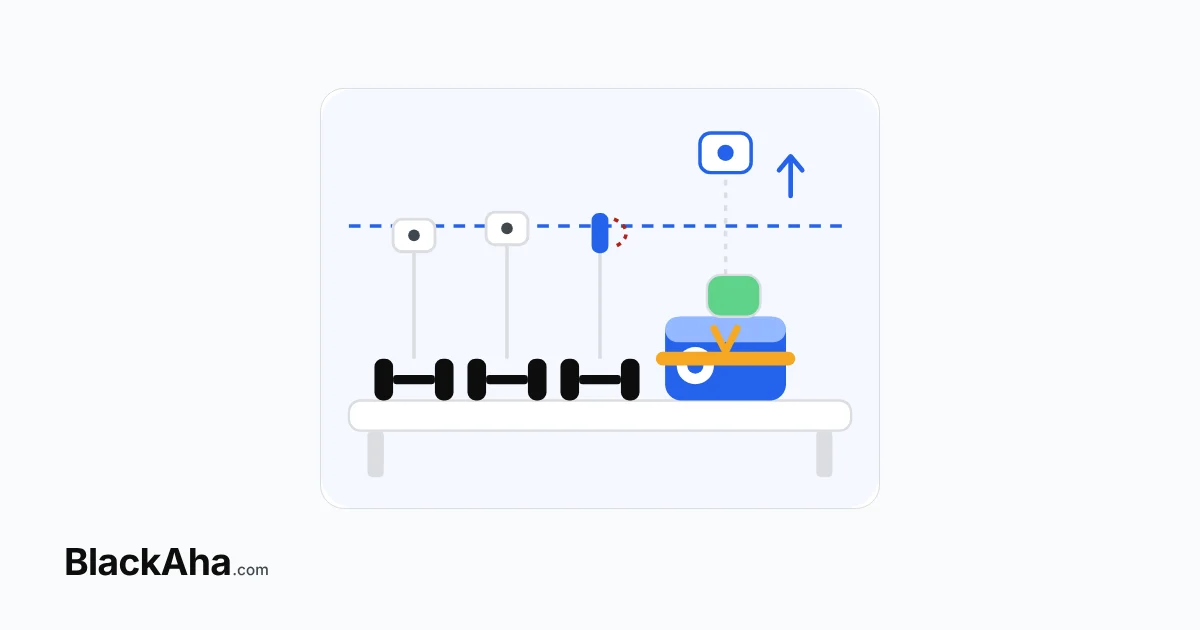
Value based vs competitive pricing is not one choice for the whole shop. Price a product by the market when buyers can find the identical item elsewhere. Price it by buyer value when your offer differs in a way buyers notice.
Most stores need both. A home fitness store, for example, sells branded dumbbells that every rival also lists, and its own yoga mat bundle that nobody else sells. One pricing rule for both products will be wrong for at least one of them. This guide gives you a rule you can apply product by product.
Value based vs competitive pricing: what is the real difference?
Value-based pricing starts from the buyer. You ask what the product is worth to them and set a price near that figure. Competitive pricing starts from the market. You look at what rivals charge and set yours in relation to it.
Neither method is better in general. Each one answers a different question, and each one fails when it is used on the wrong product.
How do you choose the method for each product?
Ask three questions in order. Stop at the first “yes”.
| Question | If yes | If no |
|---|---|---|
| 1. Can a buyer find the identical item at other shops? | Price by the market. Go to the floor check below. | Go to question 2. |
| 2. Can buyers see a difference that matters to them? | Price by buyer value. Use rival prices only as a ceiling for comparison. | Go to question 3. |
| 3. Do your sales hold when you raise the price a little? | Price by buyer value and test upward. | Treat it as a commodity and follow the market. |
If buyers can check the price in ten seconds, the market already set it. That is why question 1 comes first. Shoppers compare identical items easily, and a higher price rarely survives the comparison.
The floor check for market-priced products
Matching the market is safe only above your own cost. Before you follow a rival down, work out the lowest price that still pays for the product, fees and shipping included. If the market sits below that floor, the product may not be worth stocking at all.
What does this look like in a home fitness store?
Take two products. The numbers below are for example only, in USD.
| Branded dumbbell set | Own yoga mat bundle | |
|---|---|---|
| Your cost | $150 | $14 |
| What rivals charge | $199, $205, $209 (same item) | $22 to $30 (similar mats, no bundle) |
| Question that decides it | 1: identical item elsewhere | 2: bundle is a visible difference |
| Method | Market | Buyer value |
| Price you set | $199 | $34 |
| Margin per unit | $49 | $20 |
The dumbbell set is identical everywhere, so $199 matches the lowest rival and keeps a $49 margin. A price of $229 would rest on a value story that buyers cannot see.
The yoga mat bundle is different. Bought separately, a mat ($24), a strap ($8) and a carry bag ($12) cost $44. At $34 the buyer saves $10, and you earn $20 per unit. If you had copied the $26 price of a plain mat, you would earn $12 per unit and give away $8 on each sale. At 100 units a month, that is $800.
Notice that the mat prices of $22 to $30 are not the right yardstick for the bundle. They describe a different offer. They only show the range buyers already know, and the bundle must justify sitting above it.
Which mistakes does each method invite?
- Market pricing on everything. Your own products get dragged down to rival levels, even where buyers see more in them.
- Value pricing on everything. You charge for a difference nobody can see, and identical items stop selling.
- Guessing the value. Without evidence, a value price is a hope. Rival prices for similar items and your own sales history give you a starting range.
- Setting it once. A product can move from one group to the other. A bundle copied by rivals soon becomes a market-priced item.
A quick test for telling the two groups apart is in our guide to which products should follow the market.
How do you put this into practice?
- List your products and mark each one: identical elsewhere, different, or unsure.
- For identical items, collect current rival prices and set your floor price.
- For different items, write down the difference buyers can see, then set a price range from similar rival items and your own sales.
- Review each group on a schedule and move products when the facts change.
If you want a ready-made split, see how to match the market on entry items and price by value on the rest.
How BlackAha helps
BlackAha.com tracks competitor prices on product pages, so the market side of each decision rests on current data. Product Price Index compares each product price with the tracked market. Smart Price gives recommended prices with three pricing strategies (Aggressive, Balanced and Premium), which helps when you set a range for products priced by value.
Key takeaways
- Choose the pricing method per product, not per shop.
- Identical items follow the market. Different items can earn a price based on buyer value.
- Ask three questions in order: identical elsewhere, visible difference, and whether sales hold at a higher price.
- Check your floor price before you match a rival.
- Review the split regularly, because products move between groups.
Frequently asked questions
Can I use both pricing methods in one store?
Yes, and most stores should. Use the market for identical items and buyer value for products that differ in a way buyers notice, as in the fitness store example above.
How do I know if buyers value a difference?
Look for signs in your own data. If a product keeps selling when you raise the price a little, or sells well next to cheaper rivals, buyers see something in it.
Should I always match the lowest rival on identical items?
Not always. Match only if the price stays above your floor. Otherwise, hold a higher price, or decide whether the product is worth stocking.
How often should I review which method each product uses?
Review on a regular schedule, and also when a rival copies your product or changes its prices. A product that was different can become a commodity.
You can try BlackAha on your own products and see where each one sits against the market.


 English
 ไทย
 Tiếng Việt
 한국어
 日本語
 简体中文
 Français
 Deutsch
 Русский
 Italiano
 Polski
 Español