
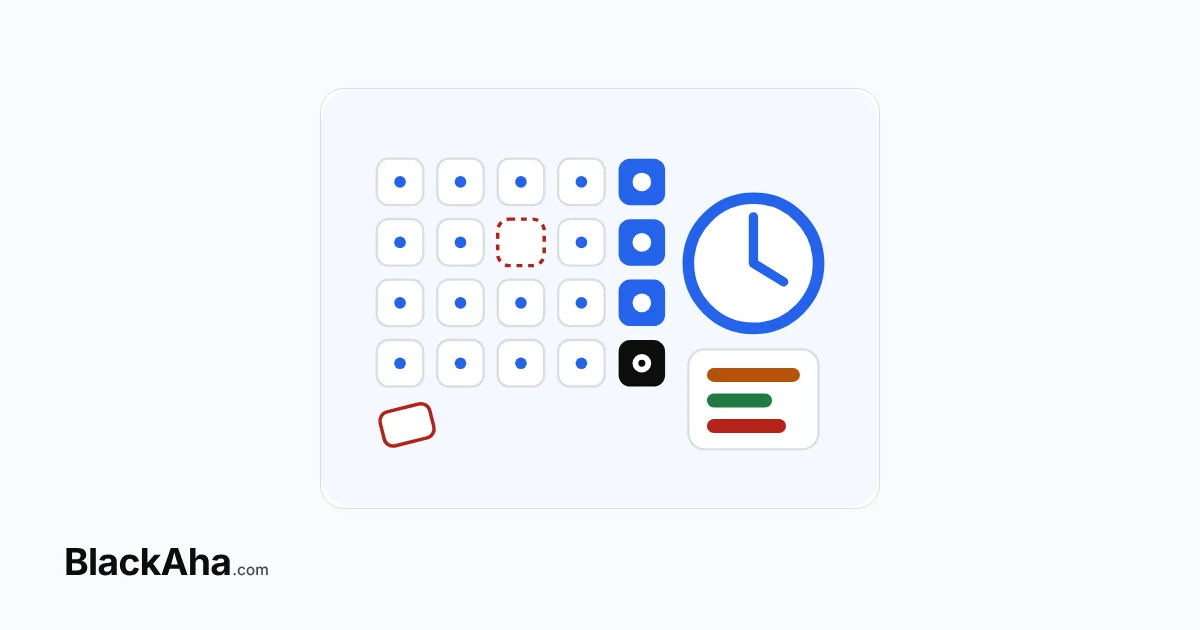
A pricing routine for an online store splits the work into three rhythms. Each day, spend about 10 minutes on alerts for your key products. Each week, spend under an hour on recommendations and price position. Each month, spend about two hours on categories, rivals and your rules.
A fixed routine beats a burst of checking after a bad week. Small, regular looks catch problems while they are still cheap to fix.
Why does checking prices only after a sales dip cost you?
Picture a two-person homeware store. Sales of its best ceramic mugs fall for three weeks before anyone looks. By then, a rival has sat below it for a month, and the store has lost those orders for good.
The opposite also happens. A product stays priced too high because no one noticed rivals had raised their prices too. Or a panicked cut goes too deep, and every sale after it earns less than it should.
The cause is the same in each case. Nobody owns the job, so it happens only when something already hurts. A routine gives the job an owner, a time slot and a short list.
What should a pricing routine for an online store include?
It should include three layers, each with its own question and time budget. The daily layer asks what changed. The weekly layer asks what needs a new price. The monthly layer asks whether your approach still fits the market.
| Rhythm | Question it answers | Time budget (for example) | Output |
|---|---|---|---|
| Daily | What changed since yesterday? | 10 minutes | A short list of products to watch |
| Weekly | Which prices should move? | 45 minutes | Price changes made, each with a reason |
| Monthly | Is the approach still right? | 2 hours | Updated rules, floors and rival list |
The budgets are illustrative. Over a month with 20 working days, they add up to 200 + 180 + 120 = 500 minutes, a little over 8 hours. For a two-person team, that is about one hour a week each.
What should you check every day?
Check only what changed, and only for products that matter. The daily look is for noticing, not fixing. Most days, it should end with no price change at all.
- Read the price change alerts for your top sellers and your main rivals.
- Flag any rival that moved more than your threshold, for example 5%, on a key product.
- Check whether a low rival price is real: in stock, no hidden conditions, not a short flash offer.
- Note products you went out of stock on, since their prices do not matter today.
- Write each flag in one line. Leave the decision for the weekly review.
If a big rival undercuts a top seller by a wide gap, you can act the same day. Keep that exception for cases your pricing policy names in advance.
What belongs in the weekly price review?
The weekly review is where prices actually move. Work from a list, not from memory, and give every change a reason.
- Go through the products flagged during the week first.
- Compare each current price with its recommended price, and sort into raise, keep and lower.
- Check your price position on key products: are you where you meant to be, cheapest, middle or premium?
- Look for prices you can raise. Rivals going up, or going out of stock, is margin you are leaving on the table.
- Check every planned cut against your minimum price before you save it.
- Record each change with a reason and a date to look at it again.
That last step makes next month easier. A simple log of why each price moved lets you see which kinds of changes helped sales and which only cost margin.
What deserves a monthly look?
Once a month, step back from single products. The goal is to fix the setup that produces your prices, so the daily and weekly work stays small.
Categories and brands
Rank your categories by how far your prices sit from the market. Fix the two furthest out first instead of repricing everything. Our guide to finding the categories where your prices are out of line shows how.
Rivals
Review who you track. Drop sellers who no longer compete with you, and add new ones that keep showing up near your products. Note any rival whose pricing pattern has changed.
Rules, floors and the policy itself
Check that your minimum prices still match your costs, since fees and shipping change. Then reread the rules you follow when a rival cuts. A short one-page pricing policy keeps both people making the same call.
End the month with a short summary: position by category, the biggest rival moves, what you changed and what is still open. That summary starts next month’s weekly reviews.
How do you keep a small team on the routine?
Make it a calendar event, not a good intention. Routines fail when they depend on someone remembering.
- One owner per rhythm. In the homeware store, one person reads the daily alerts and the other runs the weekly review. They do the monthly look together.
- Fixed slots. For example, alerts with the morning coffee, the review on Tuesday, the monthly look on the first Monday.
- A clear handoff. Daily flags go into one shared list that the weekly review empties.
- A skip rule. If the daily look finds nothing, close it. A short check is a good check.
Cut the routine down before you drop it. In a busy season, keep the daily alerts and the weekly review. Move the monthly look, but do not skip it twice in a row.
How BlackAha helps
BlackAha.com tracks competitor prices automatically and sends Price Change Alerts by email, Slack, Telegram, WhatsApp or Lark. That covers the daily look without opening every rival page.
For the weekly review, Smart Price recommends a price for each product with three strategies: Aggressive, Balanced and Premium. It is recalculated daily and sorts products into to raise, on target and to lower. My Store Price Ranking shows your price position across the tracked market.
For the monthly look, the Category, Brand and Domain reports group pricing and competition the same way your review does. Dynamic Pricing keeps a price update history, which helps when you check what changed and why.
Key takeaways
- A pricing routine has three rhythms: daily alerts, a weekly price review and a monthly look at the setup.
- Give each rhythm a time budget. In the example, the total is a little over 8 hours a month.
- Daily checks notice changes. Weekly reviews move prices. Monthly reviews fix categories, rivals and rules.
- Record a reason for every change so you can learn which moves worked.
- Name one owner per rhythm and put each slot in the calendar.
Frequently asked questions
How often should a small online store check competitor prices?
Look at alerts for key products daily, review prices weekly and check your overall setup monthly. Daily checks only notice changes. Most price changes happen in the weekly review.
How long does a pricing routine take each week?
In the example in this post, about 50 minutes of daily checks plus a 45-minute review. The monthly look adds about two hours. Adjust the budgets to the size of your catalog.
Should I change a price the same day a rival cuts?
Usually not. Flag it and decide in the weekly review. Act the same day only when your pricing policy says so, for example when a strong rival undercuts a top seller by a wide gap.
What if the daily check finds nothing?
Close it and move on. A routine that often ends with no change is working. It means you are watching, not reacting.
Put the three slots in your calendar this week and start with your 20 best sellers. You can try BlackAha on your own products.
 English
 ไทย
 Tiếng Việt
 한국어
 日本語
 简体中文
 Français
 Deutsch
 Русский
 Italiano
 Polski
 Español