
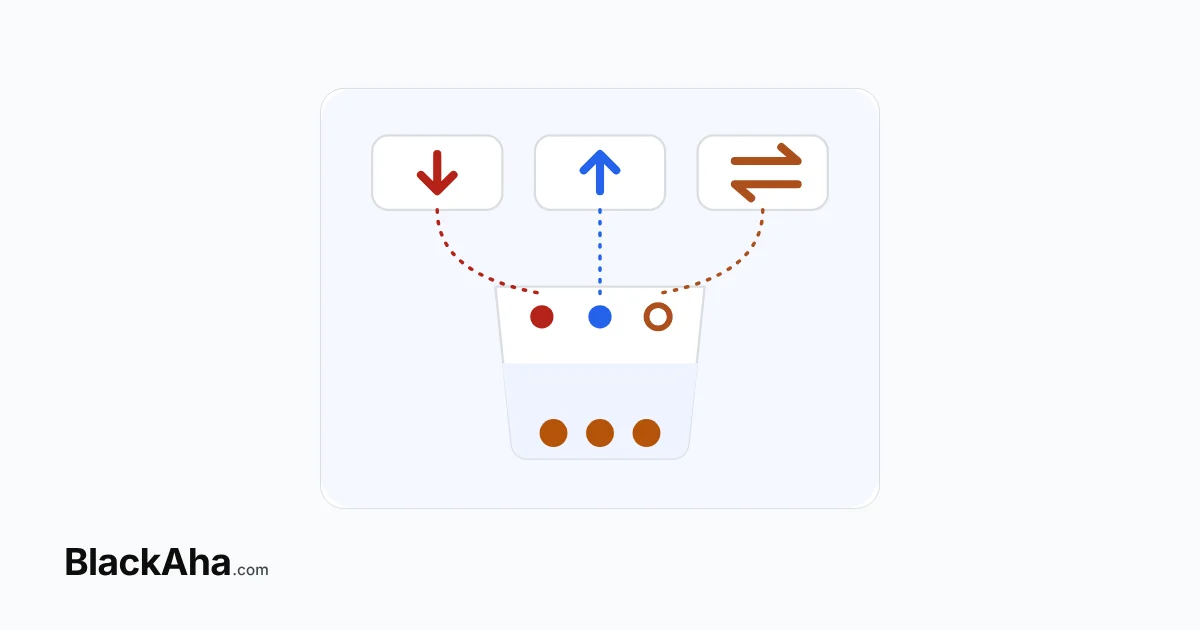
Most ecommerce pricing mistakes fall into three families: prices set too low, prices left too high, and the wrong reaction to a rival. Each one leaves a signal in your own data, such as a price index far from 100 or a sale price that never ended. Find the signal first, then fix that one mistake.
These mistakes rarely show up as a bad month. They show up as a good month with less profit in it.
Why can margins shrink while sales stay steady?
Because the leak is in the price, not in the volume. Picture a growing beauty store. Orders are flat and revenue looks fine, yet profit is down. Nobody changed the strategy. Prices drifted one product at a time: a match here, a promotion that never ended there. This slow slide has a name, price erosion.
Here is an illustrative example in USD. A vitamin C serum costs the store $24 per order, including fees and shipping. It used to sell at $40. After matching the cheapest rival twice, it now sells at $34. Sales stay at 150 a month, so nothing looks wrong. Monthly profit falls from $2,400 to $1,500.
A 15% price cut took 37.5% of the profit. Margin is the thin slice on top of cost, so every dollar off the price comes out of that slice.
Which ecommerce pricing mistakes set prices too low?
1. Chasing the lowest price on every product
Being the cheapest feels safe, but it ties your price to the seller with the lowest costs or the oldest stock. The signal is a price index well below 100 on products that sell steadily anyway. An index of 90 means you are 10% below the market average. The fix is to raise in small steps and watch sales after each one.
BlackAha Smart Price puts products priced below its recommendation on a “to raise” list. To weigh those signals together, see our guide to telling when you are underpriced.
2. Discounts that never ended
A campaign ends, but a few prices stay at the sale level. Nobody notices, because those products sell well. The signal is your own price history showing a promotional price weeks after the campaign. The fix is to compare live prices with your planned price list after every campaign. Here is how to find sale prices that outlived their campaign.
Which mistakes keep prices too high?
3. Missing rivals that moved lower
Without automatic tracking, you see a rival’s new price only after your sales drop. The signal is falling sales on a product where My Store Price Ranking shows you as Higher than average or Highest price. The fix is to set Price Change Alerts on key products and read index and position every week. Our checklist for prices above what the market will pay walks through it.
4. Comparing against the wrong product
A rival’s pack of three can look cheaper than your single bottle. A 30 ml size can look cheaper than your 50 ml. The gap is false, so any price move based on it is wrong too. The fix is to compare per unit before you decide. At $18 for 30 ml and $25 for 50 ml, the smaller bottle costs $0.60 per ml and yours costs $0.50. See how pack sizes and bundles skew a comparison.
Which mistakes come from reacting the wrong way?
5. Following a rival’s move without knowing why
A rival raises a price, and you follow. But the rise may come from low stock or a paused ad campaign. When they restock, they drop back and you are left high. The signal is a change at one rival only, while its stock or ad status changes too. Price Tracking records stock status, and Ad Tracking shows whether a rival runs Google Ads or Meta Ads. Start with the usual reasons a competitor raises prices.
6. Matching every cut with no floor
Each match looks small. Added up, they become a price war you never chose. The signal is a price that only ever moves down. The fix is a price floor for each product, and rules that respect it. Our guide to setting a minimum selling price shows the maths.
How do you check your store for these mistakes?
Run the same short review every month, one category at a time. Read each row, find the signal, apply the fix.
| Mistake | Signal in your data | Fix |
|---|---|---|
| Chasing the lowest price | Index well below 100, steady sales | Raise in small steps |
| Discount never ended | Sale price still live after the campaign | Check against your price list |
| Missed a rival’s cut | Sales falling, position Highest price | Alerts on key products |
| Wrong comparison | Gap too large for the same item | Compare per unit |
| Followed a move blindly | One rival moved, its stock or ads changed | Find the cause first |
| No floor | Price only moves down | Set a floor per product |
Look first at the products that sell the most. A small leak on a best seller costs more than a large one on a slow product.
How BlackAha helps
BlackAha.com is a competitor price tracking and pricing tool for online stores. Smart Price tells you, for each product, how many percent you are above or below its recommendation. Product Price Index and My Store Price Ranking show where you sit in the tracked market. Price Change Alerts tell you when a rival moves, by email, Slack, Telegram, WhatsApp or Lark. Dynamic Pricing applies your rules, and its guardrails always run last, so a rule cannot push a price below your floor.
Key takeaways
- Steady sales with shrinking profit usually means prices have drifted, one product at a time.
- Sort mistakes into three families: too low, too high, wrong reaction.
- Each mistake has a signal in your own data. Look for the signal before you change a price.
- In the illustrative example, a 15% price cut took 37.5% of the profit.
- A floor on every product stops many small matches from adding up to a price war.
Frequently asked questions
What is the most common ecommerce pricing mistake?
Chasing the lowest price on every product. It feels safe, but it ties your price to the seller with the lowest costs. A price index well below 100 on products that sell steadily is the usual sign.
How do I know if my prices are too high?
Look for falling sales on products where your price position is Higher than average or Highest price. Then check whether a rival moved lower recently.
Should I follow a competitor who raises prices?
Not before you know why. Low stock or a paused ad campaign can explain a rise, and the price may drop back soon. Check the rival’s stock status and ad activity first.
How often should I review my prices?
A short monthly review per category catches most drift. Alerts on your key products cover the weeks in between.
Pick your three best sellers and check them against the table today. You can try BlackAha on your own products.
 English
 ไทย
 Tiếng Việt
 한국어
 日本語
 简体中文
 Français
 Deutsch
 Русский
 Italiano
 Polski
 Español