
Tracking competitor prices matters because online shoppers can compare stores in seconds. Knowing what rivals charge lets you adjust offers, stay competitive and keep margins healthy. You can track manually, build an in-house system or use price monitoring software.
Why is tracking competitor prices important in e-commerce?
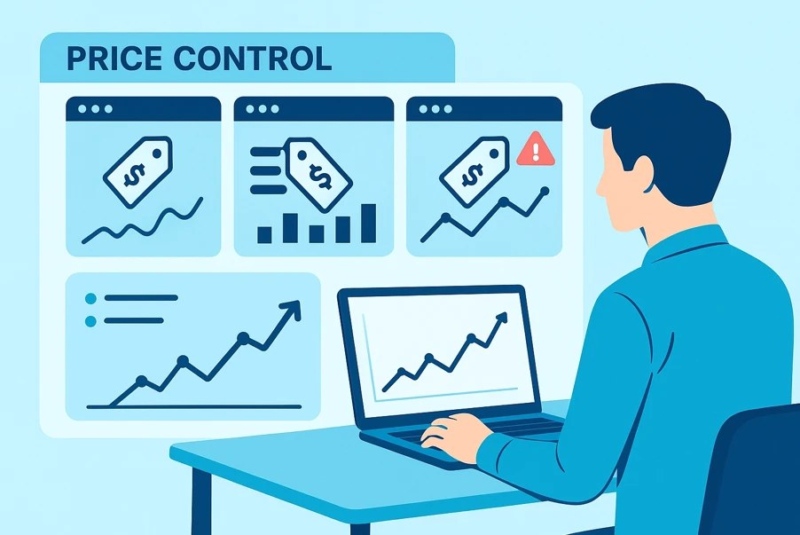
Consumers today have an unprecedented range of choices about where and from whom to buy. To stay competitive and keep both potential and existing customers engaged, e-commerce companies need effective price monitoring. It helps you adjust your offers and keep your profit margins healthy enough to sustain the business.
But how should you monitor your rivals’ prices? This post covers three main methods:
- Manual tracking
- Developing your own in-house system
- Using competitor price monitoring software
Each option has its own cost and effectiveness. Below we walk through the pros and cons of each so you can choose the one that suits your business.
How do you choose the right price tracking approach?
Whatever your e-commerce niche, you will eventually need to adjust your prices, whether to keep pace with competitors or to run promotions around events like holidays or Black Friday. Choosing the price tracking method that fits your needs can be challenging.
Start with three questions: how many products and competitors you need to watch, how often prices in your market change, and how much time and technical capacity your team can spend on the job. The sections below show how each method answers them.
Is manual price tracking still worth it?
Automation is key in today’s fast-paced e-commerce environment. For businesses with many products, manually tracking competitor prices quickly becomes time-consuming and distracting for decision-makers.
First, consider how often you check your competitors’ prices today — weekly, monthly or daily. With only a handful of products and competitors, manual tracking may still be manageable. Once your catalog grows beyond a few dozen products, it is time to consider automation, because daily manual checks take time away from improving other parts of your business.
Spreadsheets can serve as a central place for manual tracking, but the approach is labor-intensive and limits how effective your monitoring can be. For stores with varied product ranges, manual tracking is not advisable.
Imagine you have 50 products in your store and want to check your top 10 competitors. You need to answer questions such as:
- How often will you check their prices?
- If it is daily, you will need to verify 500 price points every day — an overwhelming amount of work for any e-commerce professional.
Should you build an in-house price tracking system?
If you want to adapt prices quickly as market conditions change, you need a proactive approach to competitor price tracking, and many businesses consider building an internal system. Bear in mind that internal constraints, such as people and budget, can complicate this. Price tracking is mainly an external task, especially as e-commerce marketplaces multiply.
Before committing to an in-house solution, check whether you have the people and money it needs. Besides a dedicated software developer to build and maintain the tool, you will face ongoing costs such as salaries and server maintenance.
Even if you have a development team, it may be stretched across many tasks, which limits how capable your tool becomes. Specialized SaaS tools already offer features such as stock availability checks, история цен, reporting, category-level pricing analysis and customizable alerts.
Why use competitor price monitoring software?
To follow price changes consistently across many channels, automated SaaS price monitoring is highly effective. It scales with your catalog, lets your team focus on more pressing work and keeps your decisions backed by accurate data. BlackAha.com, for example, offers automated competitor price tracking that checks competitor product pages and records every price change and stock status.
With up-to-date data, you can respond to market changes proactively rather than reactively, for instance through оповещения об изменении цен when a competitor moves. Manual data entry also invites human error: a small typo can have big consequences, such as recording a price drop from 100 to 1 instead of 100 to 10.
An automated system may look like an extra expense, but weigh it against the cost and risks of paying a team to update prices by hand.
Conclusion: embracing competitor price tracking
If you believe your products are unique enough not to need regular price comparison, you may be right — but e-commerce keeps getting more competitive. To stay relevant, tracking competitors is not just advisable; it is essential. They sell across many channels, including social media and marketplaces like Amazon.
An effective price monitoring system gives sellers a clear view of the market, so you can refine your pricing strategy as conditions change. Instead of spending resources collecting data, a ready-made system lets you concentrate on what you do best.
A clear method for tracking competitor prices helps your business adapt and thrive as the market fluctuates.
Главное
- Shoppers compare stores easily, so knowing competitor prices is essential to stay competitive and protect margins.
- Manual tracking in spreadsheets only works for a handful of products and competitors.
- An in-house system needs dedicated developers, salaries and server maintenance.
- Automated price monitoring software scales, reduces human error and frees your team for other work.
Частые вопросы
When is manual competitor price tracking enough?
Manual tracking can work if you sell only a handful of products against a few competitors. As your catalog grows, daily checks quickly become unmanageable — 50 products and 10 competitors already mean 500 price points a day.
What does an in-house price tracking system cost?
Beyond building it, you need a dedicated developer to maintain the tool, plus ongoing costs such as salaries and server maintenance.
Why is automated price monitoring more reliable than manual entry?
Automatic data collection removes typing mistakes, such as recording a drop from 100 to 1 instead of 100 to 10, and keeps data current so you can react quickly.
How does BlackAha track competitor prices?
BlackAha checks competitor product pages automatically, records every price change and stock status, keeps the price history, and can alert you by email, Slack, Telegram, WhatsApp or Lark when competitors change prices.
 English
 ไทย
 Tiếng Việt
 한국어
 日本語
 简体中文
 Français
 Deutsch
 Русский
 Italiano
 Polski
 Español
Добавить комментарий